
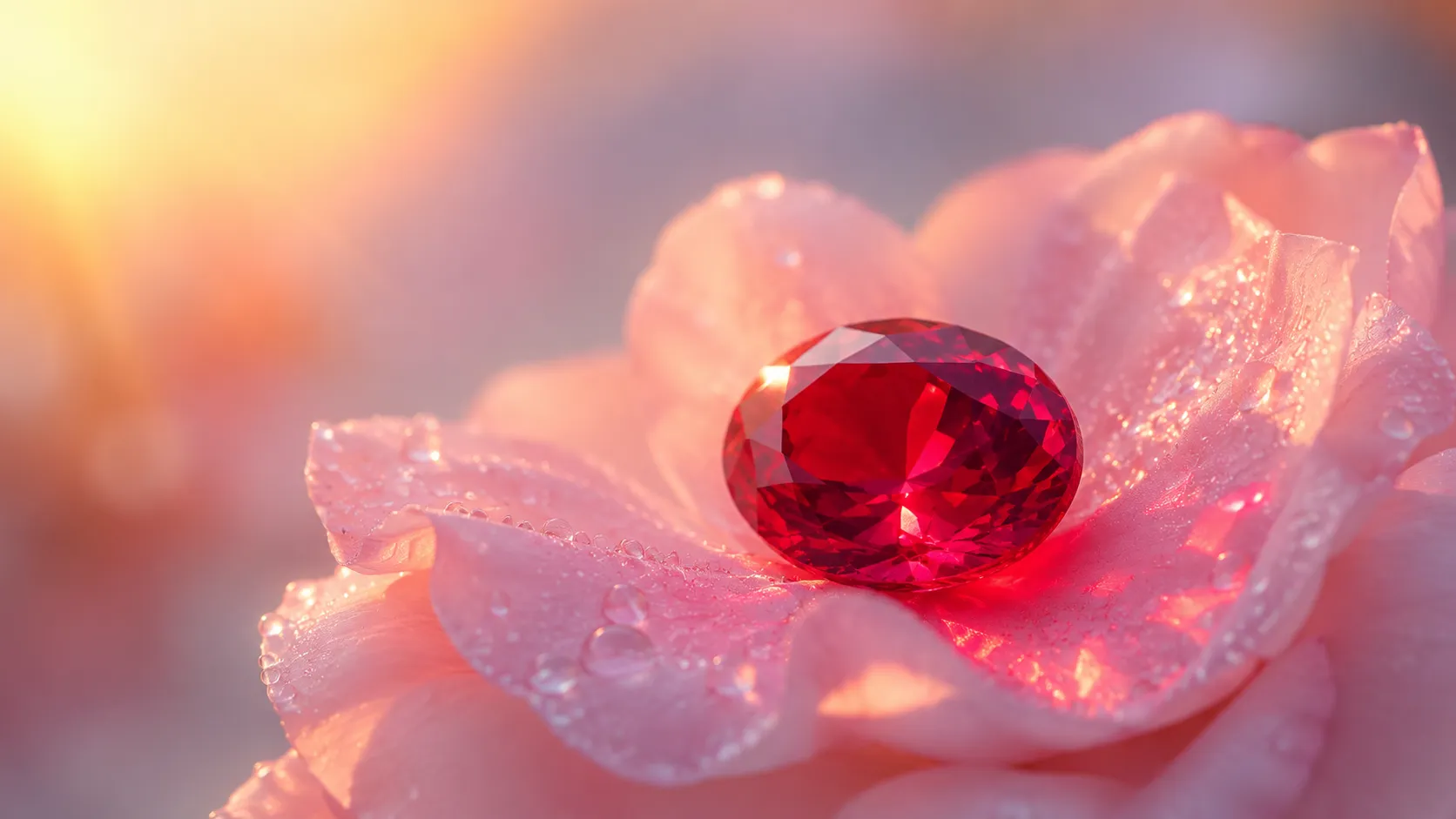
Few gemstones capture attention as quickly as a ruby. The moment light strikes a high-quality ruby, it can appear almost alive, glowing with a deep red intensity that has fascinated collectors, royalty, and jewelry enthusiasts for centuries. Yet despite its fame, many people still wonder what a real ruby actually looks like. Is it supposed to be perfectly red? Should it be flawless? Does every inclusion mean something is wrong with the stone?
The truth is much more interesting than most people realize. Genuine rubies are products of nature, formed under extraordinary geological conditions over millions of years. Because of this natural origin, no two rubies look exactly alike. Their colors vary, their internal structures differ, and their visual characteristics tell stories about how they formed deep within the Earth.
Learning how to recognize the appearance of a genuine ruby can help buyers make informed decisions and avoid common misconceptions. A stone does not need to be perfect to be authentic. In fact, some of the features that people mistakenly view as flaws are actually valuable clues that confirm a ruby’s natural origin. Understanding color, inclusions, light performance, surface features, and differences between natural and synthetic stones provides a much clearer picture of what makes a ruby real.
Understanding the True Nature of Ruby
Ruby belongs to the mineral family known as corundum. What gives ruby its distinctive red color is the presence of chromium within its crystal structure. Without chromium, corundum appears as sapphire in a variety of other colors. This unique chemical combination creates one of the most valuable and sought-after gemstones in the world.
Why Ruby Is One of the Most Recognized Gemstones
A ruby’s reputation is built largely on its color. Throughout history, cultures associated rubies with passion, power, protection, and prosperity. Unlike many gemstones that rely primarily on sparkle, rubies derive much of their appeal from their rich color saturation and inner glow.
Natural rubies typically display shades ranging from pinkish red to deep crimson, sometimes with subtle hints of purple or blue. These variations are completely normal and often help gemologists determine a ruby’s origin and authenticity. Genuine stones rarely exhibit a perfectly uniform appearance because natural geological processes are inherently unpredictable. Think of a ruby like a handwritten signature. Every stone contains small variations that make it unique. Those differences are not defects; they are evidence of a natural formation process that cannot be perfectly duplicated by nature or technology.
The Rich Color Range Found in Genuine Rubies
When people imagine a ruby, they usually picture a vivid red gemstone. While red is certainly the defining characteristic, the reality is far more nuanced.
From Pinkish Red to Deep Crimson
Natural rubies exist across a surprisingly broad spectrum of red tones. Some stones appear lighter and slightly pinkish, while others display dark crimson hues with exceptional saturation. Many genuine rubies also exhibit secondary undertones of purple or blue that influence their overall appearance. The exact shade depends on factors such as chromium concentration, trace elements, geographic origin, and crystal structure. This variation means that two authentic rubies sitting side by side may look noticeably different while both remain completely genuine.
| Ruby Color Range | Typical Appearance |
|---|---|
| Pinkish Red | Bright, lively, youthful appearance |
| Pure Red | Classic ruby coloration |
| Deep Crimson | Rich and luxurious look |
| Slightly Purplish Red | Elegant and sophisticated tone |
| Vivid Red | Highly saturated premium appearance |
The Famous Pigeon Blood Ruby Color
Among collectors, few terms carry as much prestige as “Pigeon Blood.” This description refers to a vivid, highly saturated red with a slight bluish undertone. Such stones are extremely rare and often command premium prices in the marketplace. Many buyers mistakenly assume every authentic ruby should display this exact color. In reality, genuine rubies come in many shades, and a ruby does not need to match the Pigeon Blood standard to be natural or valuable.
How Light Interacts With an Authentic Ruby
One of the most captivating aspects of a real ruby is how it responds to light. Unlike artificial materials that may appear flat or lifeless, natural rubies often display remarkable depth and complexity.
Brilliance, Glow, and Internal Reflection
When light enters a ruby, it interacts with the crystal structure before reflecting back toward the viewer. This process creates a distinctive richness that gives authentic rubies their famous visual depth. Rather than appearing like a painted surface, the color seems to come from within the stone itself.
High-quality rubies often exhibit a vivid internal glow. As lighting conditions change, subtle shifts in brightness and tone become visible. This dynamic appearance is one reason rubies remain highly prized among gemstone collectors.
A real ruby rarely appears one-dimensional. Instead, it reveals layers of color and reflections that create visual complexity. Even smaller stones can display impressive brilliance when properly cut.
Fluorescence and the Ruby’s Signature Fire
Many natural rubies exhibit strong red fluorescence when exposed to ultraviolet light due to the chromium responsible for their color. This fluorescence can enhance a ruby’s visual appeal, making it appear brighter and more vibrant. At the same time, fluorescence alone cannot confirm authenticity because synthetic rubies can also fluoresce strongly. Gemologists view fluorescence as one piece of evidence rather than a definitive identification method.
Natural Inclusions and Why They Matter
Perhaps the most misunderstood aspect of rubies is the presence of inclusions.
Many first-time buyers assume that a flawless gemstone must be better than one containing internal features. In reality, inclusions often provide valuable evidence that a ruby formed naturally.
The Fingerprints of Nature
Natural rubies develop under immense pressure and temperature deep within the Earth’s crust. During this process, tiny minerals, fractures, and growth features become trapped inside the crystal. These inclusions serve as permanent records of the gemstone’s formation history. Gemologists frequently refer to inclusions as nature’s fingerprints because they are unique to each stone. Just as no two snowflakes are identical, no two natural rubies contain precisely the same inclusion patterns.
Rather than reducing authenticity, these features often strengthen it. Many natural rubies contain visible inclusions even when viewed without magnification.
Common Inclusion Types Found in Real Rubies
Rutile Silk
One of the most recognizable ruby inclusions is rutile silk. These tiny needle-like structures create a soft internal texture that can contribute to a ruby’s appearance. Under certain circumstances, rutile silk can even produce special optical effects such as asterism in star rubies.
Mineral Crystals and Fingerprints
Natural rubies may also contain small mineral crystals, healed fractures, and fingerprint-like patterns. These characteristics develop naturally during crystal growth and are highly valued by gemologists when assessing authenticity. A completely flawless ruby is exceptionally rare. Stones that appear perfectly clean may warrant closer examination because flawless appearance can sometimes indicate synthetic origin.
Surface Features That Distinguish Real Stones
The surface of a ruby can reveal important clues about its history and authenticity.
Natural Growth Patterns
Natural crystal growth often leaves subtle evidence behind. Under magnification, gemologists may observe growth zoning, angular structures, and other features related to the ruby’s formation process. These patterns tend to appear irregular because nature rarely works with perfect symmetry. Such characteristics help distinguish naturally formed rubies from laboratory-created alternatives.
Surface Imperfections and Wear
Older rubies, especially those worn in jewelry for decades, may display minor abrasions, facet wear, or polishing marks. These features are often normal and do not necessarily indicate damage or poor quality.
A gemstone that has spent years being worn and admired will naturally acquire signs of its journey. Much like an antique piece of furniture, subtle wear can contribute to the story behind the stone.
Consumers should be cautious about expecting unrealistic perfection. Natural gemstones often possess small irregularities that add character rather than detract from value.
Differences Between Natural and Synthetic Appearance
Modern technology has made it possible to create laboratory-grown rubies that closely resemble natural stones.
How Lab-Grown Rubies Look Different
Synthetic rubies are chemically identical to natural rubies because both consist of corundum colored by chromium. This means basic tests involving hardness, density, and refractive index cannot reliably separate the two. Identification depends largely on internal characteristics and growth structures. Lab-grown stones often display greater clarity because they form in controlled environments without many of the disruptions found in nature. As a result, synthetic rubies may appear unusually clean and consistent.
That does not mean synthetic rubies are fake. They are genuine ruby material created in a laboratory rather than mined from the Earth.
Curved Growth Lines and Gas Bubbles
Certain manufacturing methods leave recognizable clues inside synthetic rubies. Flame-fusion rubies, for example, may contain curved growth lines and microscopic gas bubbles. These features rarely occur in natural stones and often help gemologists identify laboratory origin. The contrast between natural and synthetic appearance can be summarized below:
| Characteristic | Natural Ruby | Synthetic Ruby |
|---|---|---|
| Inclusions | Mineral crystals, silk, fingerprints | Gas bubbles, flux remnants |
| Growth Lines | Straight or angular | Curved striae |
| Color Distribution | Slight variation common | Often highly uniform |
| Clarity | Usually contains inclusions | Frequently cleaner |
| Formation | Geological process | Laboratory growth |
Warning Signs of Common Ruby Imitations
Not every red gemstone marketed as a ruby is actually ruby.
Glass, Garnet, and Other Simulants
Common ruby imitations include colored glass, garnet, cubic zirconia, red spinel, and other materials designed to mimic ruby’s appearance. Some imitations may look convincing at first glance but often lack the depth, brilliance, and complexity found in genuine ruby. Glass imitations frequently appear overly transparent and may contain rounded bubbles. Their color can seem unnaturally uniform and lack the richness associated with ruby.
Certain simulants also display orange or yellow undertones that differ from the red spectrum typically observed in authentic rubies.
Red Flags Buyers Should Never Ignore
Several warning signs deserve attention:
- Perfect clarity combined with a suspiciously low price.
- Neon-like color that appears artificial.
- Visible round bubbles inside the stone.
- Lack of natural inclusions under magnification.
- Sellers unwilling to provide certification.

Colby Raines is a 27-year-old American blogger from Madison, Wisconsin, specializing in fashion accessories, crafts, and digital publishing. He combines hands-on experience with detailed research to produce practical articles that help readers make informed decisions. His writing is known for its conversational style, reliable sourcing, and consistent quality. Through braceletdesigns.online, he contributes original content designed to build trust and provide genuine value for a broad audience.